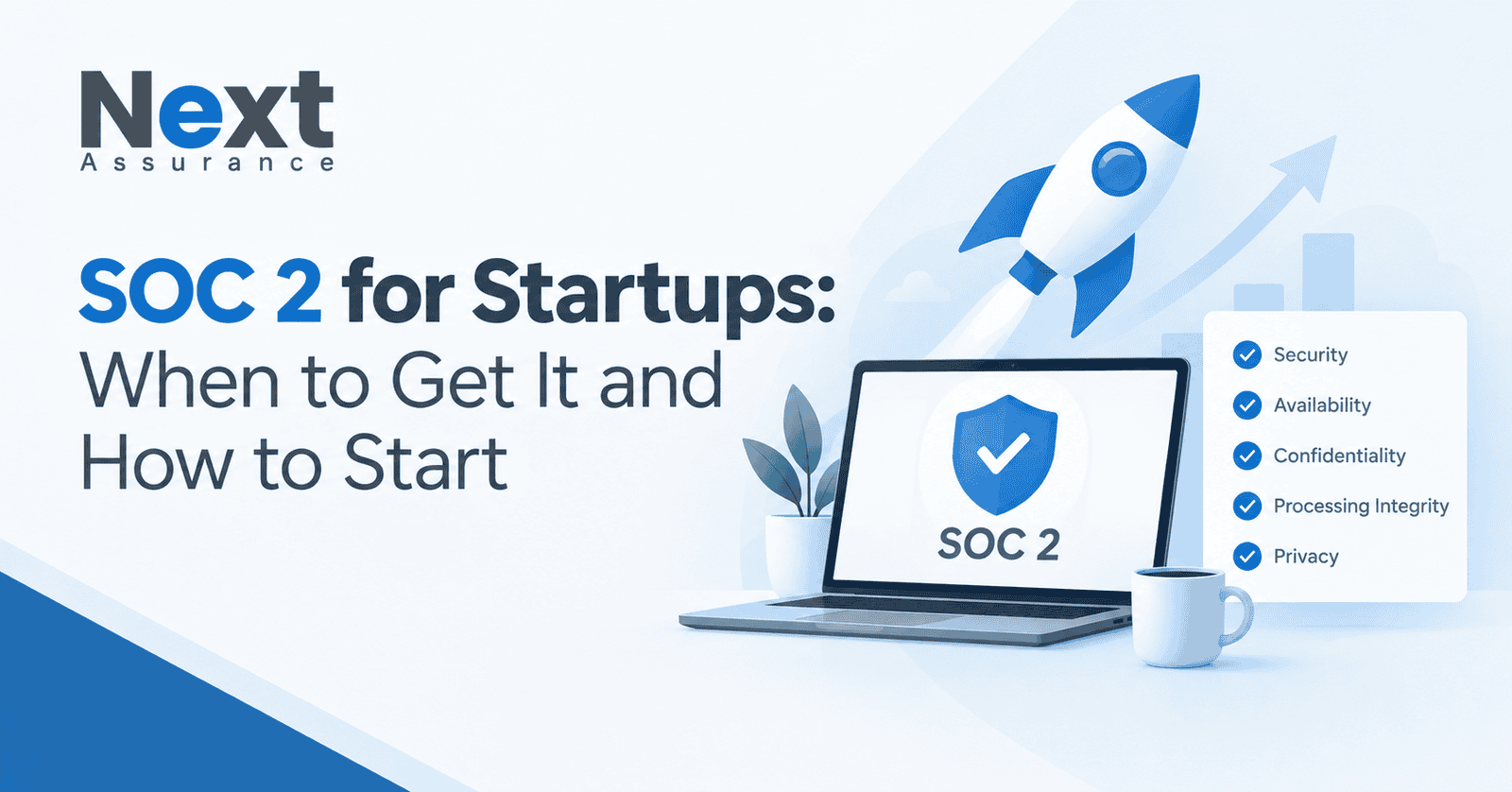
SOC 2 for startups is worth pursuing when customers start asking for it in security reviews, and the best first step is usually to find out which report type each blocking deal accepts. No law requires it, so the decision is about customers, timing and focus rather than a funding stage.
When should a startup get SOC 2?
A startup should get SOC 2 when buyers begin to require it, not before. The clearest signals are security questionnaires that ask for a report, procurement blocking a signed deal, or a pattern of lost deals tied to security review.
- A named prospect asks for it: ask which report type, which categories and by when.
- Security reviews slow every enterprise deal: a report can replace long questionnaires.
- You are entering a regulated vertical: see SOC 2 for fintech, SOC 2 and HIPAA and SOC 2 for EdTech.
- You process payroll or HR data: customers’ auditors may ask for SOC 1 for payroll providers.
- Investors or partners ask about security maturity: a plan may be enough before a full report.
This is a planning judgment, not an AICPA rule. If no buyer is asking yet, a lighter investment in policies and basic controls keeps the option open.
Should a startup start with SOC 2 Type I or Type II?
Start with whichever your blocking customers accept. A Type I confirms that controls are suitably designed at a point in time, and a Type II also tests that they operated effectively over a period, which gives buyers more assurance.
| Report | What it tests | When it fits a startup |
|---|---|---|
| Type I | Design of controls at one date | A deal is waiting and the buyer accepts it |
| Type II | Design and operation over a period | Buyers expect operating evidence |
| Type I then Type II | Design first, then operation | You need something now and a stronger report later |
The AICPA describes SOC 2 as a report on controls relevant to security, availability, processing integrity, confidentiality or privacy, and its standards do not set a minimum observation period for a Type II. Our SOC 2 audit guide explains both types; agree the window with your auditor.
What should a startup scope in its first SOC 2?
Scope only the production service customers use and the controls that protect it. Security is the mandatory category, and every extra category adds controls and evidence to run.
- Define the product and infrastructure that hold customer data.
- Pick Security first; add Availability or Confidentiality only if customers ask or contracts promise it.
- List cloud and tool vendors that touch customer data and decide how they will be handled.
- Write the short policy set auditors will test, then assign an owner to each control.
The SOC 2 compliance checklist turns these steps into a task list, and SOC 2 for SaaS companies covers scope in more depth.
How should a startup think about cost and time?
Cost and time depend on scope, readiness and the report type, so a quote beats a rule of thumb. Published ranges exist but come from interested parties, so treat them as context and confirm with a quote.
- Readiness: a team with basic access control, logging and change review needs less remediation.
- Observation period: a Type II adds the length of the window you choose.
- Tooling: automation platforms reduce manual evidence work but add subscription cost.
- Auditor choice: firms differ in experience, process and price.
See what a SOC 2 audit costs for the factors and sources, and how to choose a SOC 2 auditor for what to ask firms.
What should be ready before you hire an auditor?
Before fieldwork starts, a startup should have its scope written down, its core policies approved and its main controls running. Auditors test what you describe, so a short, accurate description beats a long, aspirational one.
- System description draft: what the service is, which systems and data are in scope.
- Approved policies: security, access, change, incident and vendor management, each with an owner.
- Running controls: multi-factor authentication, access reviews, logging and code review in place.
- Vendor list: every provider that touches customer data, with the review you did.
The AICPA states that the Trust Services Criteria are outcomes, so your own control design is what gets tested; see SOC 2 control examples for common choices.
What mistakes slow a first SOC 2?
The common mistakes are over-scoping, treating the report as a one-time project and leaving evidence collection to the end. Each is avoidable with early decisions and owners.
- Including categories no customer asked for.
- Writing policies the team does not follow, which creates exceptions.
- Starting the observation period before controls actually run.
- Forgetting that the report must be renewed; see SOC 2 exceptions and qualified opinions for what happens when controls slip.
Next Assurance helps early-stage teams scope a first report that matches the customers waiting on it. See our SOC 2 audit service.
Frequently asked questions about SOC 2 for startups
When should a startup get SOC 2?
When customers require it. Clear signals include a signed deal blocked on security review, repeated questionnaire requests for a report, or entry into a regulated vertical. No law requires SOC 2, so ask your top prospects what they accept before you commit time and budget.
Can a startup get SOC 2 without a security team?
Yes. SOC 2 does not require a dedicated security team. It requires documented, operating controls with named owners and evidence. Many small companies assign responsibility to engineering or operations leaders, use automation for evidence collection and engage a CPA firm for the examination.
Is SOC 2 Type I enough for a startup?
It can be. A Type I confirms that controls are suitably designed at a point in time, and some buyers accept it as a first report. Many enterprise buyers prefer a Type II. Ask each blocking customer which they require, and plan a Type II afterward if they do.
How long does a first SOC 2 take for a startup?
It depends on readiness, scope and report type, and no standard timeline exists. A Type I needs scoping, remediation and fieldwork. A Type II adds an observation period that the AICPA does not fix at a minimum length. Ask your auditor for a realistic schedule based on your current controls.
Do we need a compliance automation tool?
No, but it can help. Tools collect evidence, track tasks and map controls, which reduces manual work for small teams. They do not replace the CPA firm’s testing or opinion. Compare subscription cost against the time your team would spend gathering evidence by hand.
What happens if we fail SOC 2?
There is no pass or fail. A CPA firm issues an opinion and lists exceptions where controls did not operate as described. An unmodified opinion with some exceptions can still be useful. A qualified opinion signals material problems. Fix gaps before fieldwork to improve the outcome.
Sources
Facts checked against the sources below on October 7, 2026. Timing advice is planning judgment; the AICPA sets no minimum observation period and no expiry for a report.
- AICPA & CIMA – System and Organization Controls: SOC Suite of Services: the AICPA’s overview of SOC 1, SOC 2 and SOC 3 reports.
- AICPA & CIMA – 2017 Trust Services Criteria (With Revised Points of Focus – 2022): the criteria a SOC 2 examination evaluates.
- AICPA & CIMA – Statement on Standards for Attestation Engagements No. 18: the attestation standard that governs SOC examinations.